

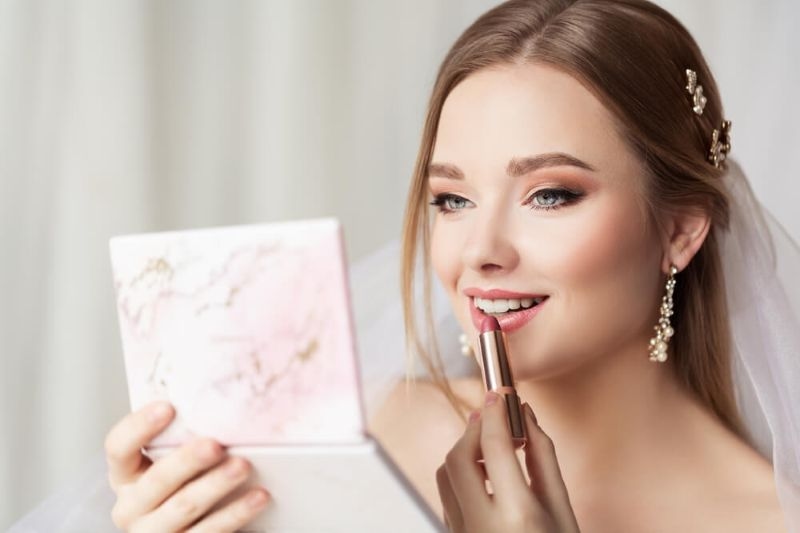
Your wedding day moves fast. One moment you’re laughing with your bridesmaids, the next you’re tearing up during vows, hugging relatives, dancing under warm lights, and smiling for hundreds of photos. Through all of it, your makeup has one job: stay put. This blog walks you through how to build makeup that actually lasts all wedding day, not just the ceremony. From skin prep to sweat-proof makeup choices, from bridal setting techniques to realistic touch-up advice, we’ll cover what works, what doesn’t, and why a calm, layered approach beats heavy makeup every time.
A good, long-lasting bridal look isn’t about piling on product. It’s about planning. Think of it like building a house. If the base isn’t right, nothing on top behaves.
These long-wear bridal makeup tips focus on durability without stiffness. You want skin that looks like skin, eyes that still sparkle at hour eight, and lips that don’t vanish by dinner.
Here’s the thing. A beach wedding in Florida behaves very differently from a ballroom wedding in Chicago. Heat, humidity, lighting, and even your dress fabric affect makeup wear.
If you’ll be outdoors, sweat-proof makeup matters more than glow. If your venue is heavily air-conditioned, hydration becomes key. Makeup longevity tips only work when they match real conditions, not Pinterest dreams.
Honestly, a 30-minute trial tells you almost nothing. Ask your artist to mimic your actual timeline. Wear the makeup for six to eight hours. Eat, talk, laugh, maybe even cry a little. That’s how you test staying power.
Makeup clings to skin, not hope. Prepping correctly is half the battle and often the most overlooked.
This section sets the stage for sweat-proof makeup that doesn’t feel heavy or cakey.
The night before and the morning of, stick to gentle cleansers. Over-cleansed skin produces more oil. That’s the irony. Calm skin behaves better under makeup.
Dehydrated skin breaks down foundation faster. Lightweight gel moisturizers work well for most US climates. Brands like Neutrogena Hydro Boost or Embryolisse Lait-Crème are common artist favorites for a reason.
Not all primers do the same job. Blurring primers help texture. Gripping primers improve hold. Mattifying primers help sweat control. Mixing primers by zone is one of those makeup longevity tips pros swear by.
Your base should move with your face. A frozen look cracks, creases, and photographs badly after a few hours.
This is where balance matters more than trends.
Long-wear doesn’t mean heavy. Many modern foundations are flexible yet durable. Think Estée Lauder Double Wear used sparingly, or Armani Luminous Silk layered with care.
Apply thin layers. Let each one settle. It’s slower, yes, but it pays off by hour ten.
Cover redness, dark circles, and discoloration only where needed. Over-concealing creates texture that breaks down faster. Sometimes less really does more.
This might sound backward, but layering cream products first creates grip. Light powder on top seals it. This combo improves wear without drying the skin.
A matte foundation on very dry skin can crack, while a dewy finish on oily skin can slide.
Wedding emotions are real. Even if you’re not a crier, wind, lights, and laughter test eye makeup.
These techniques protect your look without making your eyes feel tight.
Mascara, eyeliner, and even cream shadows should be waterproof or water-resistant. It’s one of the simplest sweat-proof makeup swaps you can make.
Think of it as insurance. A good primer prevents creasing and fading. Urban Decay Primer Potion or Milani Eye Primer are widely used across the US bridal scene.
Lightly pressing matching powder over the liner increases longevity. Just don’t over-pack. Too much powder can migrate later.
Lips work hard on a wedding day. Talking, sipping, kissing, smiling. Expecting perfection is unrealistic, but smart choices reduce maintenance.
This is where realistic touch-up advice starts early.
Applying a lip stain under lipstick leaves color behind even after fading. It’s a quiet trick that makes a big difference.
Apply lipstick, blot gently, reapply. This builds longevity without thickness. Matte formulas last longer, but creamy mattes feel more comfortable for all-day wear.
Hydration matters, but oily balm around lip lines breaks color faster. Use balm only in the center if needed.
Setting is not just about spraying and hoping for the best. It’s a system.
These bridal setting techniques help makeup stay flexible, not stiff.
Use finely milled powder only where needed. Under the eyes, around the nose, and the T-zone. Leave the rest of the skin alive.
Light mist between layers works better than one heavy spray at the end. Let each mist dry naturally. Fans are fine, but patience works better.
The final spray should feel like a veil, not rain. If skin feels wet, it’s too much.
When setting with powder, gently press it into the skin using a puff or dense brush instead of sweeping.
Touch-ups are normal. The trick is doing them without disturbing what’s already working.
This is where many brides accidentally undo hours of careful work.
Use blotting papers or a clean tissue. Press gently. Rubbing removes foundation and creates patches.
You don’t need everything. Lip color, blotting papers, a small powder, and maybe concealer. That’s it. Over-correcting causes buildup.
Honestly, mirrors lie at weddings. Lighting, nerves, and adrenaline distort perception. If makeup still feels comfortable, it probably looks fine.
Long-lasting bridal makeup isn’t about chasing perfection. It’s about feeling like yourself from first look to last dance. When you focus on smart prep, layered application, sweat-proof makeup choices, thoughtful bridal setting techniques, and calm touch-up advice, everything holds together naturally. The goal isn’t a frozen face. It’s confidence that stays put, even when the day gets emotional, loud, and unforgettable.
Ideally, makeup should finish about 45 minutes before you get dressed. This gives products time to settle and reduces transfer.
Airbrush can last well, but traditional makeup with proper layering often lasts just as long and feels more natural.
Focus on skin prep, targeted primer, thin layers, and sweat-proof makeup formulas rather than heavy powder.
It helps to assign one trusted person to hold your touch-up kit. That way, you’re not thinking about makeup all day.
This content was created by AI